How Voice to Medical Notes Technology Is Reshaping the Doctor-Patient Relationship

The Screen Has Been Getting in the Way
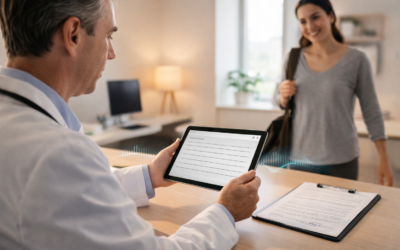
Patients notice when their doctor spends the appointment looking at a computer screen. Research supports what patients intuitively sense. Physician eye contact, engaged listening, and undivided attention are associated with higher patient satisfaction, better communication of symptoms, and improved treatment adherence. Yet the demands of electronic documentation pull physician attention toward the screen repeatedly during every encounter. Voice to medical notes technology does not just save time. It changes the physical dynamic of the clinical encounter by removing the computer from the center of the interaction.
What Changes When Documentation Happens Automatically
When a physician does not need to type notes during or after an appointment, they can position themselves differently in the exam room. They can maintain eye contact. They can follow a line of questioning wherever it leads without worrying about falling behind on documentation. They can pick up on non-verbal cues that a typing clinician would miss.
Physicians using voice to medical notes systems frequently report that patients seem more open and communicative during appointments. This is not coincidental. When patients sense that a clinician is fully present, they share more information, ask more questions, and leave appointments feeling more confident in their care.
Patient Safety Implications of Better Documentation
The benefits of voice capture go beyond interpersonal dynamics. Detailed, accurate clinical notes are fundamental to patient safety. When documentation happens in real time or immediately after an encounter, it captures clinical details that might be forgotten or imprecisely recalled during a later charting session.
For care coordination between providers, medication management, and tracking of chronic conditions over time, note accuracy is genuinely consequential. Voice-to-notes technology supports not just efficiency but the kind of clinical record integrity that protects patients across the continuum of care.
Specialty Applications Worth Highlighting
Mental health is one specialty where the relationship between documentation and therapeutic presence is particularly acute. A psychiatrist or therapist who is typing notes during a session signals to the patient that the session content is being recorded rather than received. Voice capture after the session, informed by the provider’s engaged memory of the encounter, allows for complete documentation without the clinical compromise of in-session typing.
voice to medical notes
Pediatrics is another specialty that benefits strongly. Parent-physician communication during well-child visits and sick appointments requires careful attention to history-taking, developmental screening, and parental concerns. Full documentation attention being available without the computer competing for physician focus makes a genuine difference in these visits.
Conclusion
The case for voice to medical notes technology extends well beyond documentation efficiency. It is ultimately about restoring the primacy of the human relationship in clinical care, allowing physicians to be fully present for their patients while technology handles the record-keeping that modern healthcare requires.